PN Research Lab
Placebo & Nocebo Lab
At the PN Research Lab, we research topics in the cross-disciplinary interface between psychology, health and neuroscience. Our research primarily focuses on correlations between psychological, neurological and biological factors – placebo and nocebo effects in particular.
We study psycho-neuro-biological relationships across disorders of the central nervous system, for instance chronic pain, Alzheimer’s disease and Parkinson’s disease, and across pharmacological and non-pharmacological interventions such as surgery, deep brain stimulation, spinal cord stimulation, acupuncture, psychotherapy, music, hypnosis, animal-assisted therapy and extended reality (XR).
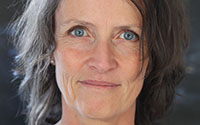
The group is headed by Lene Vase, professor of neuroscientific psychology at the Department of Psychology and Behavioural Sciences.
The projects are financed by the Lundbeck Foundation, Independent Research Fund Denmark and others.
Contact
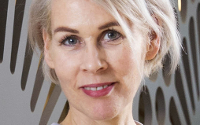
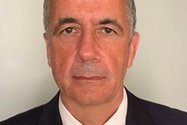
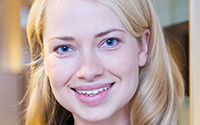
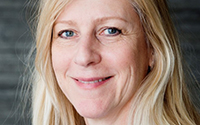
If you are interested in hearing more about the research unit and our activities, you are most welcome to contact:
Lab members
Lab members

Videnskabeligt personale
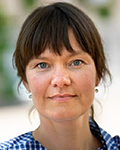
Lene Vase, MSc (psychology), PhD (psychology, 2006), DMSc (medical science, 2018)
Professor of neuroscientific psychology, visiting professor abroad, at, e.g., Harvard Medical School, USA.
Research focus: Psychological and neurobiological mechanisms involved in placebo and nocebo effects across disorders of the central nervous system, for instance pain, Alzheimer’s disease and Parkinson’s disease. These mechanisms are studied in relation to pharmacological and non-pharmacological treatments such as surgery, deep brain stimulation, spinal cord stimulation, psychotherapy, music, acupuncture, physiotherapy and animal-assisted therapy.
Research funding: My research is funded by the Lundbeckfonden, the Danmarks Frie Forskningsfond, the Aarhus Universitets Forskningsfond, the Innovationsfonden, the National Institute of Health, the Innovative Medicine Initiative and International Network Programme, the Danish Agency for Science, Technology and Innovation. In addition, several projects are funded by the Trygfonden and the Parkinsonforeningen.
Publications and outreach: I have more than 100 peer-reviewed international publications, and my research has been published in leading journals such as The Lancet, The British Medical Journal, The Lancet Neurology, JAMA Psychiatry and Psychotherapy and Psychosomatics. My research has been cited in international media such as the New York Times, Der Spiegel and the Sydney Morning Herald, and I frequently present my research at international conferences such as the World Congress of Pain.

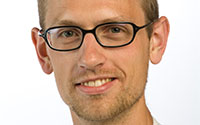
Simple Futarmal Kothari, BDS, MSc (Headache disorders and Facial pain), PhD (Odontology)
Research focus: My research primarily deals with clinical trials in pain conditions, specifically migraines, focusing on placebo research evaluating novel methods for accurate drug effect estimations and complex interactions between drug and placebo responses. Other areas of research include orofacial pain and headache disorders, neurorehabilitation, sensorimotor function, brain stimulation, special care dentistry.
Background: The randomized controlled trial (RCT) is a gold standard in developing and testing new drugs including for migraine. In a RCT, typically an active drug is compared to an inactive placebo. Recently, research have indicated that some assumptions underlying RCT may be incorrect leading to miscalculation of the actual drug response accounting for large placebo responses. As a result, promising new compounds fail to outperform placebo in RCTs, which leads to the conclusion that the drug is not effective. Recently, there has been great progress in the development of migraine treatments, especially preventive treatments. On the other hand, there are also increasing discussions on anti-migraine trials for how the true value of treatment effects should be assessed. To resolve this problem, we will develop and assess an improved method for testing the efficacy of new drugs that is able to account for the complex relationship between drug and placebo responses.

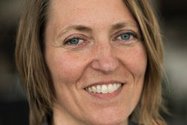
Sigrid Juhl Lunde, MSc (psychology), Assistant Professor
Assistant Professor at the PN Research Lab, Neuroscientific Research Unit
Research focus: My primary research areas include non-pharmacological treatment of pain and placebo effects on pain, focusing on underlying psychological and neurobiological mechanisms.
Background: About 20% of the Danish population suffer from and live with pain. Around the world, there is an increase in the number of chronic pain patients and a growing opioid crisis in terms of excessive use and dependency of opioid drugs; therefore there is a distinct need for non-pharmacological, complementary methods for treatment of pain. A decisive factor for the use of such treatments – e.g., music and animal-assisted therapy – is that there is no risk for side effects as is often the case with ordinary medical treatments. At the same time, there is a need for more stringent methods of investigation documenting the effect of such treatments. Therefore, in cooperation with researchers from, for instance, Center for Music in the Brain and Harvard Medical School, I study which specific and non-specific components are involved in complementary pain treatment in order to specify how they influence our experience of pain and underlying neurobiology.

Christina Emborg, Postdoctoral Researcher at the PN Research Lab, Neuroscience Research Unit
Research focus: My research primarily focuses on patients with severe chronic pain who are treated with spinal cord stimulation. I investigate how patients’ expectations of treatment efficacy influence their experience of the treatment.
Research background: Spinal cord stimulation (SCS) is a treatment used in clinical practice for patients with severe chronic pain who have exhausted other treatment options. The procedure involves the implantation of an electrode near the spinal cord and carries certain risks, including infection and lead migration. Existing evidence supporting the efficacy of spinal cord stimulation largely stems from industry-sponsored research, such as studies funded by device manufacturers. Consequently, there is a pressing need to investigate the treatment's effects further, particularly through placebo-controlled trials. In collaboration with clinicians and researchers at institutions including Aarhus University Hospital, I explore how patients’ expectations interact with their perceived treatment outcomes. In addition to enhancing our understanding of spinal cord stimulation’s clinical effects, the study will contribute valuable insights into for whom the treatment is effective, the mechanisms underlying its effect, and the physiological and psychological parameters it influences.

Mette Sieg, MSc (health psychology), PhD student
Mette Sieg, MSc (health psychology), PhD student
PhD student at the PN Research Lab, Neuroscientific Research Unit
Research focus: My research primarily concerns the negative effects of informed consent and how these effects are mediated and moderated by patient expectations, doctor-patient relationship and other contextual factors.
Background: Informed consent is an important foundation in the practitioner-patient relation and fundamental patient rights. However, some studies have indicated that the information patients are given regarding treatment before giving informed consent, may actually increase the risk of experiencing side effects subsequently. This means that, by respecting the patient’s right to informed consent, the practitioner may potentially harm the patient unnecessarily. As this research area is relatively new, our knowledge about the negative effects of informed consent is still sparse. I cooperate with researchers from Maryland University, the University of Toledo and Aarhus University Hospital, on investigations of how much information on side effects the general population wish to have and to which degree information on side effects influences the prevalence of side effects in connection with heart surgery. All of this in an attempt to uncover how the nocebo effect of informed consent is best minimized in clinical practice.
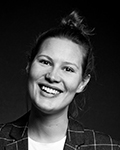
Andrea Søndergaard Armbruster, certified MSc in psychology, PhD student
PhD student at the PN Research Lab, Neuroscientific Research Unit
Focus areas: My research primarily deals with pain in Parkinson´s Disease and on how to optimize evaluation of the effect of pharmacological treatments.
Background: Pain is the most frequent non-motor symptom in the neurodegenerative disorder Parkinson´s disease. With reported prevalence ranging from 40% to 95.5%, studies consistently report pain is more prevalent in people with Parkinson´s disease compared to the general population. Pain in Parkinson´s Disease is associated with significant impairments including increased depression, anxiety, and low quality of life. Yet, research on pain in Parkinson´s Disease is lacking. First, qualitative literature examining how patients with Parkinson´s Disease experience their pain and pain treatment is scarce. I therefore conduct qualitative research aiming to understand and report firsthand experiences with pain in Parkinson´s Disease. Second, experimental studies of pain in Parkinson´s disease (PD) have predominantly applied thermal, mechanical pressure, and electrical stimulation modalities. Yet, literature suggests the chemical stimulation modality using intramuscular injections of hypertonic saline could be a relevant method to study pain in Parkinson´s Disease as the quality of the induced pain mimics clinical pain. I am therefore currently examining the utility of using intramuscular injections of hypertonic saline to induce and assess musculoskeletal pain in Parkinson´s Disease experimentally.
Research projects and funding
Research projects and funding
Principal investigator
Migraine
Migraine
The aim of these studies is to investigate why there are differences in treatment effects in patients with migraine and which research designs that are most effective in assessing these treatment effects. The studies include investigation of both acute and chronic migraine treatment.
The studies are funded by the Lundbeck Fonden, the Aarhus Universitets Forskningsfond and the Helsefonden.
Spinal cord stimulation
Spinal cord stimulation
20% of the Danish population suffers from chronic pain, which has extensive consequences for patients' quality of life. Chronic pain is both complex and can be challenging to treat with medication. One type of non-pharmacological treatment used for chronic pain is spinal cord stimulation. By implanting electrodes in the spinal cord, this treatment utilizes electrical impulses to stimulate nerves, potentially alleviating chronic pain for some patients. Currently, research and testing of the treatment are primarily funded by the industry, including manufacturers of stimulation devices. The latest independent research in the field indicates significant uncertainty about the actual effectiveness and mechanisms of the treatment. However, research may not necessarily reflect the treatment's effectiveness in clinical practice. For the first time, this study examines the impact of spinal cord stimulation using a new well-controlled and clinically relevant research method. The research design specifically investigates the pain-relieving effects of spinal cord stimulation when isolated from other environmental factors, such as expectations. The study particularly focuses on ensuring the investigation is representative in clinical practice and therefore examines the patients receiving the treatment. The project allows for a precise understanding of treatment effectiveness, ensuring that the treatment is not administered unnecessarily and is given with the best possible outcome for patients.
The studie is funded by the Danmarks Frie Forskningsfond.
Parkinsons
Parkinsons
This study examines how pain is experienced and processed in patients with Parkinson's Disease.
The study is funded by The Parkinson's Foundation.
Collaborator
Investigations of placebo response and methods to reduce it in clinical trials of symptomatic osteoarthritis
Investigations of placebo response and methods to reduce it in clinical trials of symptomatic osteoarthritis
Project involving, among others, Lene Vase and Asger Reinstrup Bihlet.
The study of funded by the Innovationsfonden.
EDULOX: Psychoeducation and medical treatment for patients with severe functional disorder
EDULOX: Psychoeducation and medical treatment for patients with severe functional disorder
The purpose of EDULOX is to investigate the effectiveness of two different treatments: patient education and medical treatment, either alone or in combination, for patients with severe functional disorder. Severe functional disorder (multiorgan BDS) is a condition characterized by numerous persistent and disabling symptoms. The disorder results in reduced quality of life and lost work capacity, imposing significant costs on society in terms of increased expenses in the social and healthcare sectors. It is estimated that at least 1% of the Danish population suffers from multiorgan BDS.
In recent years, treatment options for multiorgan BDS have improved with increased research activity and the establishment of several treatment centers in Denmark. However, treatment options supported by research are still limited. Clinical trials have shown the effectiveness of certain types of psychological and medical treatment, but these treatments require highly specialized therapists or are only suitable for selected patients. There is therefore still a significant unmet treatment need. Primarily, there is a need for knowledge about treatment modalities that can be delivered by less specialized professionals to a broader patient group.
The project is funded by the TrygFonden.
Animal contact
Animal contact
Animal-Assisted Therapy (AAT) is growing and has the potential to become an important non-pharmacological supplement for the treatment of individuals with conditions such as mental illness, stress, or developmental disorders. Research indicates that the use of animals in therapeutic treatment can have significant effects on various target groups, but it is not clear what specifically about the contact with animals influences the treatment outcome. The project is divided into four work packages, where the first phase involves identifying and selecting physiological, psychological, and various behavioral measures for the effects of different degrees of contact with animals. In the latter half of the project, we investigate the immediate reactions of nursing home residents and military veterans to contact and interaction with dogs using the selected measures.
The project is funded by the TrygFonden.
Publications
Publications
Collaboration
Collaboration
PN Research cooperates with leading Danish and international research centres:













More about our research
More about our research
Would you like to join us?
Would you like to join us?
If you would like to contribute to our research by being a test subject, you are most welcome to contact us by mail: pnlab@psy.au.dk. Further information about ongoing as well as previous projects is available on this website, and we will do our best to update information on which projects presently recruit test subjects.
We frequently involve voluntary student assistants in our research projects. If you are a student of psychology, curious about research, and feel like getting a grip on the processes prior to the publications you encounter at the psychology programme, please feel free to contact us by mail: pnlab@psy.au.dk or visit us in our offices at Aarhus University.
Information regarding ongoing projects can be found here.
If you wish to become a test subject or learn about the chances of becoming a voluntary student assistant, please feel free to contact us.
News
News
PN LAB in the media
PN LAB in the media
Sådan overlevede jeg kræften - og sundhedsvæsenet
12/11/2019
1 Media contribution
Press/Media: Press / Media
Placebo: Sådan kan lægen snyde din hjerne
04/11/2019
1 item of Media coverage
Press/Media: Press / Media
Placebo: Sådan aktiverer lægen hjernens eget ’apotek’
04/11/2019
1 item of Media coverage
Press/Media: Press / Media
Patientens forventninger er afgørende for behandlingens resultat
30/08/2019
1 item of Media coverage
Press/Media: Press / Media
Kan placebo fortælle os, hvordan krop og psyke hænger sammen
01/08/2019
1 item of Media coverage
Press/Media: Press / Media
Placeboens dilemmaer: Skal vi genindføre lægens røde pille?
16/04/2019
1 item of Media coverage
Press/Media: Press / Media
Av for S…: 4 råd til at udholde smerte, hvis du slår dig
04/04/2019
1 item of Media coverage
Press/Media: Press / Media
Forskere: Man kan godt kontrollere akupunktur for placebo-effekter
17/03/2019
1 item of Media coverage
Press/Media: Press / Media
Forsøg overrasker forskere: Mænd reagerer stærkere på smerte end kvinder
19/01/2019
1 item of Media coverage
Press/Media: Press / Media
Fysiocast: #27: ’Moving on With Pain 2018 - del 1’ med Morten Høgh og Lene Vase
27/11/2018
1 item of Media coverage
Press/Media: Press / Media
Ny afhandling: Det kan betale sig at løbe langsommere i sundhedsvæsnet
06/10/2018
1 item of Media coverage
Press/Media: Press / Media
Placeboeffekt kan tænkes ind i klinisk praksis
24/09/2018
1 item of Media coverage
Press/Media: Press / Media
Min kamp mod kræften - med Arne Notkin 4:5
15/09/2018
1 item of Media coverage
Press/Media: Press / Media
Min kamp mod kræften - med Arne Notkin 1:5
25/08/2018
1 item of Media coverage
Press/Media: Press / Media
Placebo: Forventningens stærke påvirkning
01/06/2018
1 item of Media coverage
Press/Media: Press / Media
Tidligere var placebo noget, man forbandt med behandlingen af de svage, dem med lav IQ og kvinder
30/05/2018
1 item of Media coverage
Press/Media: Press / Media
Sugemærker er det nye sort - i år skal vi gå til »cupping« for at få det bedre
11/05/2018
1 item of Media coverage
Press/Media: Press / Media
Placeboforsker: Det handler om at få en bedre forståelse af, hvad der virker
24/04/2018
1 item of Media coverage
Press/Media: Press / Media
Kalkpiller og falske operationer: Sådan snyder narremedicin dig rask
08/04/2018
1 item of Media coverage
Press/Media: Press / Media
24 spørgsmål til professoren: Placebo - hjernens egen medicin
24/03/2018
1 item of Media coverage
Press/Media: Press / Media
Doktor-forsvar: Effekten af placebo-medikamenter
22/03/2018
1 item of Media coverage
Press/Media: Press / Media
Er der en videnskabelig forklaring på placeboeffekten?
13/02/2015
1 Media contribution
Press/Media: Press / Media
Yndlingsmelodien tager fokus væk fra smerterne
21/01/2015
1 Media contribution
Press/Media: Press / Media
En god konsultation giver en ekstra behandlings-effekt
01/02/2012
1 Media contribution
Press/Media: Press / Media
Ny smerteforskning: Det hjælper at tro på behandlingen
01/05/2011
1 Media contribution
Press/Media: Press / Media
Er du hypokonder?: Lær faresignalerne at kende
10/02/2011
1 Media contribution
Press/Media: Press / Media